

“I would stamp on the back of their Achilles. The little bit of hair on the back of the neck? I would pull that. I’m a little bit ashamed to say that I deliberately elbowed people in the face sometimes.”
Got your attention? Yeah, I bet.
Sometimes, as a journalist, you do interviews where you are left wondering if there is even a good angle to intro on.
But you have the opposite problem after chatting to Mark Aizlewood. Where do you start?
Head-butting German superstar Jurgen Klinsmann. Flipping the V to his own supporters, at Charlton Athletic and after transferring to Leeds United. Alcoholism. Contemplating committing suicide by jumping from a bridge in Rome. Being jailed after being found guilty of fraud.
You could write a book on Aizlewood’s life…and he did.
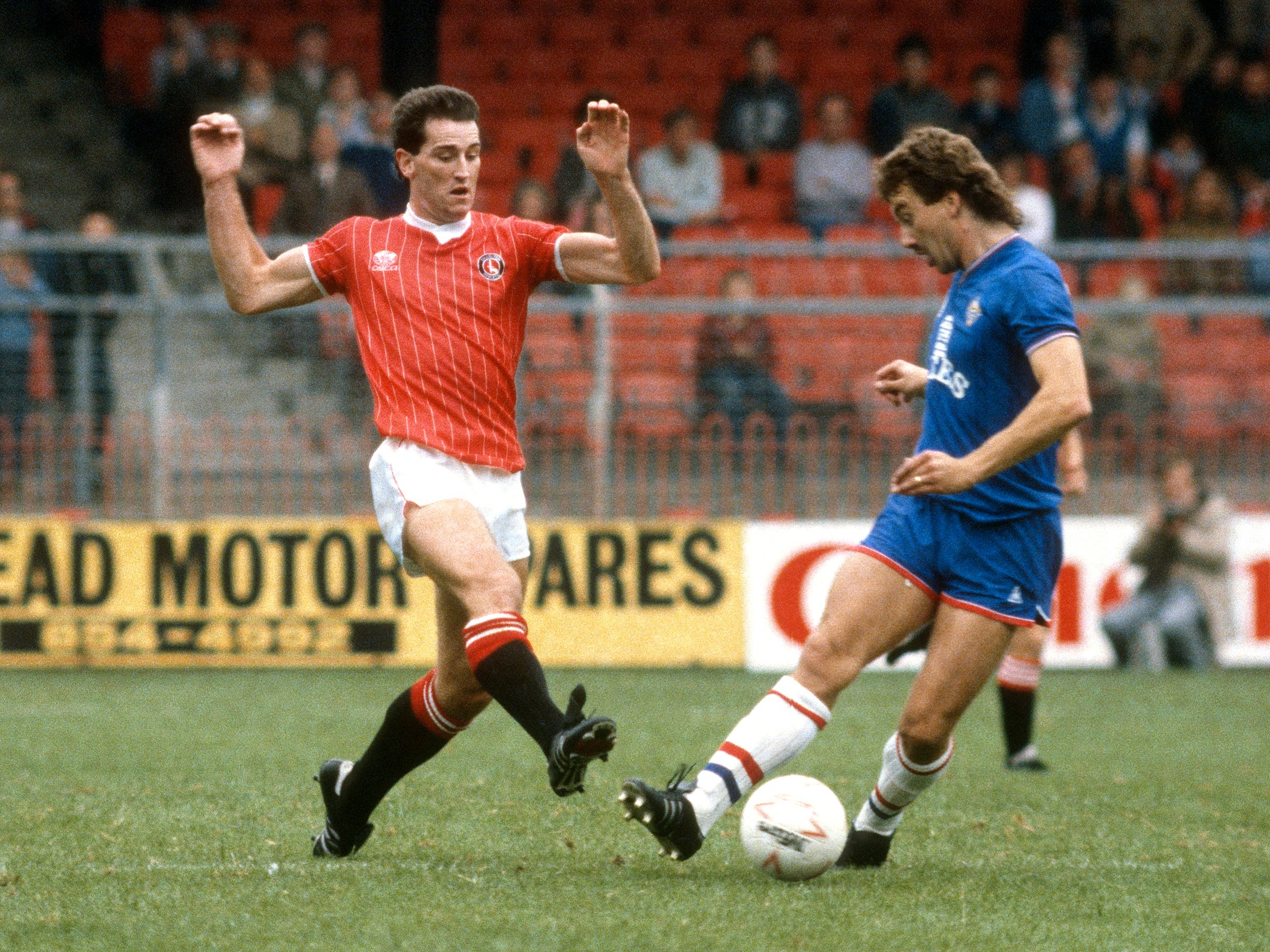
Mark Aizlewood makes a challenge during a 2-1 win over Oldham at The Valley on September 15 1984/Picture: Tom Morris
Aizlewood started at hometown club Newport County and transferred to Luton Town in 1978. Charlton Athletic made their move for him in November 1982, paying £50,000. He made 170 appearances, scoring 10 goals, before being sold to Leeds.
A thread about the former Wales international, now 66, on the Charlton Life forum saw one poster describe him as “a fine mixture of steel and finesse”.
“There were two Mark Aizlewoods, really,” he told South London Sport: Charlton Athletic Edition. “When I played international football I was surrounded by world-class footballers with great technical ability. At that level, I would say I couldn’t play - but I could stop those that could.
“Once you went down into the Football League, my technical ability was as good as anybody but I still retained the ability to be able to stop those who could play.
“At international level the manager would say to me: ‘There is a number 10 out there called Ruud Gullit. I want you to stop him kicking the ball and I’m not interested in anything else you do’.
“At Charlton, or any of my other clubs, I never had that man-marking role specifically. But I had it in my locker that I could destroy their best player. Sometimes in a legal way, but a lot of times in an illegal way. In those days all you had to worry about was two linesmen and a referee. There weren’t cameras all around the ground.
